


Henrik Ibsen, Norwegian playwright, “To live is to war with trolls in heart and soul”
The works of “the father of modern drama” are the most frequently performed in the world after those of Shakespeare, and pioneered theatrical realism.
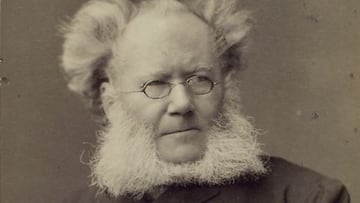

Henrik Johan Ibsen (1828 – 1906) was born on 20 March to a wealthy merchant family in the port town of Skien. However, when he was just eight years old, his father went bankrupt, throwing the family into poverty, something that has been said traumatized him for life.
Despite an unsuccessful start to his career as a playwright, in self-imposed exile in Italy he went on to produce works that today are the most frequently performed in the world after those of Shakespeare. He is considered “the father of modern drama” and “the father of realism,” pioneering theatrical realism.
Some of his most famous works include ‘A Doll’s House’ (1872), ‘Ghosts’ (1881), and ‘Hedda Gabler’(1890), which were pioneering feminist works at the time that as well as being critical of patriarchy and social norms imposed by class, delve into controversial topics.
‘Ghosts’ was initially banned in his home country of Norway, as well as Denmark and England for exploring taboo topics such as free love, incest, syphilis, and euthanasia, along with attacking religion by shining a light on the hypocrisy of morality and pulling back the curtain of the realities behind social facades.
“To live is to war with trolls in heart and soul”
It was while writing ‘Ghosts’ that he wrote to a friend in which said: “Everything that I have written is most minutely connected with what I have lived through, if not personally experienced … for every man shares the responsibility and the guilt of the society to which he belongs. To live is to war with trolls in heart and soul. To write is to sit in judgment on oneself.”
His works are deeply autobiographical and the feminine characters in them are portrayed as powerful and strong believed to be based in many cases on his mother and mother-in-law. In the case of ‘Ghosts’, it has been said that the character of Mrs Helene Alving, the protagonist, is based on his mother.
Like the protagonist’s deceased husband, Captain Alving, it’s been said that Ibsen’s father Knud took to drinking and mistreated his wife, Marichen, after the family went bankrupt. Thus, as what he said to his friend, his works were a form of personal catharsis, giving him an avenue to process the complex emotions from his life experiences.
Related stories
Get closer to the game! Whether you like your soccer of the European variety or that on this side of the pond, our AS USA app has it all. Dive into live coverage, expert insights, breaking news, exclusive videos, and more. Plus, stay updated on NFL, NBA and all other big sports stories as well as the latest in current affairs and entertainment. Download now for all-access coverage, right at your fingertips – anytime, anywhere.
And there’s more: check out our TikTok and Instagram reels for bite-sized visual takes on all the biggest soccer news and insights.
Complete your personal details to comment