


Max Planck, Nobel Prize winner in Physics: “He who has gone so far as to stop being confused, has also stopped working”
The legacy of the German physicist continues to shape how we understand research and knowledge today.
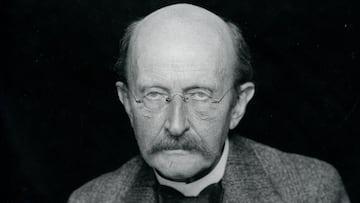
The history of modern science cannot be understood without figures like Max Planck, one of the key pioneers of contemporary physics. His thinking, reflected in statements such as “He who has gone so far as to stop being confused, has also stopped working,” perfectly captures one of his central ideas: doubt and constant inquiry are essential to scientific work.
Planck developed his academic career at universities such as Munich and Berlin, where he specialized in the physical sciences after demonstrating talent across multiple disciplines. His education was strongly influenced by the study of thermodynamics, a field that would later prove crucial to his research and to his understanding of physical processes.
The defining achievement of his career came with the formulation of quantum theory, a breakthrough that fundamentally transformed twentieth-century physics. His studies of blackbody radiation led him to propose that energy is emitted in discrete quantities, known as “quanta.” This idea not only opened a new path for scientists but also directly influenced other researchers such as Albert Einstein and Niels Bohr.
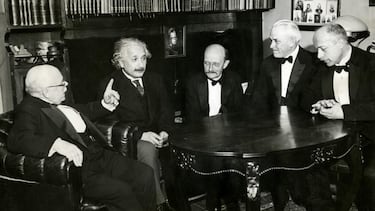
Planck was awarded the Nobel Prize in Physics in 1918
Naturally, his work received the highest recognition: in 1918, he was awarded the Nobel Prize in Physics. In addition to his research, Planck held important positions in scientific institutions such as the Prussian Academy of Sciences, solidifying his role as a leading intellectual figure in Europe for decades.
However, his personal life was marked by tragedy. The loss of his children under difficult circumstances and the destruction of his home during World War II stood in stark contrast to his scientific success. Despite this, he remained active in academic life until his final years, maintaining his commitment to the pursuit of knowledge.
Beyond his discoveries, Planck offered a profound reflection on the nature of scientific work. He argued that absolute certainty can hinder progress and that confusion is an inherent part of the learning process. His legacy lies not only in his theories but also in a vision of science grounded in curiosity, discipline, and the continual reexamination of ideas.
Related stories
Get closer to the game! Whether you like your soccer of the European variety or that on this side of the pond, our AS USA app has it all. Dive into live coverage, expert insights, breaking news, exclusive videos, and more. Plus, stay updated on NFL, NBA and all other big sports stories as well as the latest in current affairs and entertainment. Download now for all-access coverage, right at your fingertips – anytime, anywhere.
And there’s more: check out our TikTok and Instagram reels for bite-sized visual takes on all the biggest soccer news and insights.
Complete your personal details to comment