


Some surprising facts you probably didn’t know about passports: How the travel documents have changed over the years
Passports in the United States, and the rest of the world, have undergone significant changes to become the travel documents that we use today.
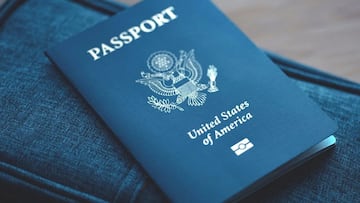

Passport ownership in the United States has dramatically increased over the past 35 years, going from just 5% in 1990 to over half the population nowadays. This has been aided by a growth in global travel as more and more people venture out beyond the nation’s borders.
Depending on how long you’ve had a passport, you may have noticed it has changed quite a bit in recent years. But that is nothing compared to the metamorphosis the U.S. passport has undergone since the first ones were issued way back in 1782.
The first passports were “letters of safe conduct”
Much like the very first recorded “passport” from ancient Egypt some 3,500 years ago, the earliest passports in the United States, and in the rest of the world, were merely letters of safe conduct. These were basically only given to people who wished to do business with a foreign government, the rest of the public didn’t necessarily need to have one to travel across a border.
According to Arizona State University professor Patrick Bixby, author of ‘License to Travel: A Cultural History of the Passport’, any American who wanted a U.S. passport would write a personal letter to the secretary of state to apply for one since so few were issued each year, less than 100 yearly through 1818.
The Civil War changed that. During a two-year period, a passport was required to enter or leave the United States. This was to prevent fighting-age men from fleeing the country. However, otherwise, during peacetime, people weren’t required to have a passport to travel abroad.
New Book Review: Isadora Dullaert reviews License to Travel: A Cultural History of the Passport by Patrick Bixby @ucpress https://t.co/omOtoZZuYu pic.twitter.com/JJJMYrWFDk
— LSE Review of Books (@LSEReviewBooks) February 17, 2023
World War I would make passports compulsory for international travel
Conflict would again make passports a necessary document, and not just for Americans but all travelers due to the outbreak of World War I. Concerns over foreign agents committing acts of espionage and sabotage prompted the new requirement and created the modern passport.
Even when peace returned, lingering “fears and suspicion that are native to warfare attached themselves to the document,” says Bixby. “Even in times of relative peace, we still have to prove who we are.”
Say cheese! Passports get pictures
U.S. passports also had pictures attached to them for the first time in 1914, instead of just a physical description of the holder written in the document, becuase of events of World War I.
This was thanks to Carl Hans Lody, a German spy, who stole a U.S. passport from the embassy in Berlin which he used to travel to England where he passed information about the Royal Navy back to his country. He was caught and executed in 1914.
"Imperial Passport" (1240 CE) issued by the authority of Kublai Khan (1215-1294 CE) from Yuan Dynasty (1271-1368 CE); – One of the two known 'Kublai Khan Passport', inscribed in Phags-Pa script and it reads -
— Archaeo - Histories (@archeohistories) February 7, 2025
”I am the emissary of the Khan. If you defy me, You die”
Mongols… pic.twitter.com/57ylQ32b8s
The letter becomes a booklet and gets multiple makeovers
The simple passport document became a full-blown booklet in 1926. The first ones, however, were not blue like they are today for the average U.S. passport. Instead they were red.
Once again though, conflict would force more changes on the U.S. passport. During World War II, the color of passports changed to green to facilitate identifying counterfeits.
Then in 1976, in honor of the U.S. Bicentennial, the color of regular booklets was changed to blue. Except for a brief period between 1993 and 1994 when green passport booklets were issued to commemorate 200 years of the U.S. Consular Service, the standard color for ordinary travelers has remained blue.
However, there are three other colors used today. Gray for private contractors when traveling in service of the U.S. government, maroon for active-duty service members and other government officials, and black booklets are issued to diplomats and the U.S. president.
Related stories

Get your game on! Whether you’re into NFL touchdowns, NBA buzzer-beaters, world-class soccer goals, or MLB home runs, our app has it all.
Dive into live coverage, expert insights, breaking news, exclusive videos, and more – plus, stay updated on the latest in current affairs and entertainment. Download now for all-access coverage, right at your fingertips – anytime, anywhere.
Complete your personal details to comment