


Liverpool’s AI revolution: why Iraola is taking the Reds back to the future
After a season in which The Reds increasingly looked like a team fighting its own instincts, the arrival of Andoni Iraola should see Anfield reset its core.


There was something, repeated so often during Arne Slot’s second season that it eventually became impossible to ignore.
Liverpool would break the first line of pressure. The difficult part had been done.
Space would appear. A midfielder would receive the ball facing forward. The crowd would rise expectantly.
And then the ball would go backwards. Back to a centre-back or the goalkeeper. Back to safety, then cleared long, often losing the possession they’d worked to have. The crowd sat back.
What should have been the beginning of an attack through some immensely talented boots further up the field, became another exercise in risk management.
Let me be clear. Slot was not necessarily wrong to value control. Modern football increasingly rewards teams capable of monopolising possession and reducing volatility. But somewhere along the way – not long into the second half of the Dutchman’s first season – Liverpool began to look like a side more concerned with protecting opportunities than exploiting them. Early shaky wins in August and September added points on the board, ultimately proving key to holding onto a valuable Champions League position, but the downwards trajectory since the sweet spot found in his first few months of joining was clear. The football increasingly felt unfamiliar.
Anfield introduces Iraola: new software to old operating system
And that is why Liverpool’s decision to turn to Andoni Iraola feels so significant. Not because he represents a revolutionary rewiring, but because he will bring a deliberate code correction. The Reds are not changing the operating system. The club still believes in intensity, pressure and attacking football. What has changed is the software running it as the last update had too many unforeseen issues.
"I want to become one more of you." ✊ pic.twitter.com/EN38rKmKRz
— Liverpool FC (@LFC) June 4, 2026
I want to note here that there are some fair defences of Arne Slot and they deserve to be acknowledged. No serious assessment of Liverpool’s season just past can ignore the circumstances. Injuries repeatedly disrupted continuity. Significant departures altered the balance of the squad. New faces arrived carrying enormous expectations. Above all, the tragic loss of Diogo Jota cast a shadow over the campaign that extended far beyond football itself.
Those realities matter.
Nor should Slot’s achievements be erased. He inherited one of the most demanding jobs in world football and delivered a Premier League title in his first season while living beneath the seemingly impossible aura of Jürgen Klopp.
But football eventually strips away excuses. And the table tends to be ruthless.
A year after winning the title, Liverpool finished fifth with 60 points. The title defence ended with a 24-point drop from the previous season and 12 league defeats, more than double the total suffered during the championship campaign. And it was, certainly after this decision, curious to see the team breathing down their neck: Bournemouth.
Iraola’s side finished only three points behind Liverpool after the best season in the club’s history. On the final day, there remained a mathematical possibility that the Cherries could have caught Slot’s team, potentially even dragging them into an unprecedented playoff scenario for Champions League qualification.
How did a club operating with a fraction of Liverpool’s resources develop a clearer identity than the defending champions?
The answer cannot be found solely in injuries. Nor transfers. Nor misfortune.
It lies in the football itself. More than results on a spreadsheet, it was the weekly algorithm being lived through by devoted fans – much, much more than ‘expert’ pundits – that finally drove home the message.
Why Iraola is the anti-Slot
One of the defining principles of Iraola’s football is that advantage should be exploited immediately.
When the press is broken, attack.
When space appears, attack.
When defenders are retreating, attack.
There is no instinctive urge to reset the move and begin again.
'More duels won and more possession won in final third of the pitch'
— Sky Sports News (@SkySportsNews) June 1, 2026
How Andoni Iraola's Liverpool could look in comparison to Arne Slot's ⤵️ pic.twitter.com/onSVVJz8bz
That philosophy turned Bournemouth into one of the Premier League’s fastest attacking teams. Iraola understands something many modern coaches, and certainly Arne, appear determined to forget: football is often easiest when the opposition is disorganised.
His teams treat those moments like gold dust. And the fans thrive off it.
Liverpool under Slot increasingly treated those moments like a buffering wheel. The attack paused while the system searched for a safer solution. Too often, a midfielder capable of threading a pass through the eye of a needle would instead watch possession recycled backwards. Escaping pressure became the objective rather than the beginning of something more dangerous. Players ahead seemed to subconsciously stop looking for the pass to come, so options disappeared.
Control is useful.
Control as an end in itself is something different.
Liverpool spent too much of the past season and a half confusing the two. Every so often there would be a period of slick, forward-thinking play leading to a chance. “He’s finally seen the strength of this group,” the frustrated faithful would say. It never lasted. The next game was simply a Slotball reboot.
Listen to what Antoine Semenyo said about Iraola last month.
— Anfield Edition | æ (@AnfieldEdition) May 30, 2026
A valuable insight into what to expect from the off.
pic.twitter.com/oLuQOCeroU
Why Iraola makes sense for this Liverpool team
One reason Iraola feels such a logical appointment is that Liverpool’s squad already appears built for much of what he wants.
Ryan Gravenberch is perhaps the clearest example. The Dutchman is at his most dangerous carrying the ball through broken structures, gliding past opponents, no matter how closely marked, and accelerating attacks. Asking him to slow games down always felt slightly unnatural, like installing a supercomputer and using it just to check the time.
Playing against a press? That’s not a problem for Ryan Gravenberch 🥶@LFC pic.twitter.com/UQydrFwrUS
— Premier League (@premierleague) March 7, 2026
The same applies to Dominik Szoboszlai, in most people’s minds the standout player in an underwhelming campaign. If footballers could be designed specifically for transition, the Hungarian might be what emerges from the tech laboratory. He runs, presses, accelerates and attacks with relentless enthusiasm. Under Iraola, those instincts become assets rather than impulses to restrain.
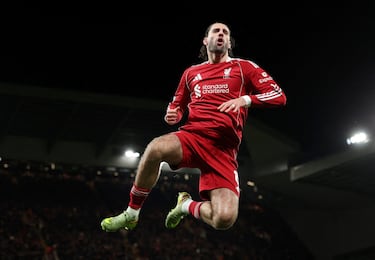
Similar arguments can be made for Curtis Jones and Alexis Mac Allister, both proven to be adept at releasing a quick first pass after regaining possession. All they need is the permission.
Rather than recycling the ball after escaping pressure, Liverpool’s midfield can punish opponents for overcommitting. Remind you of any recent Anfield bosses?
Why Wirtz could become the face of the project
Few players in Europe look better suited to Iraola’s philosophy than Florian Wirtz. OK, I get that in sport there are few certainties, and there is still a bunch of people needing convinced of what he offers. I’m not one of them.
The German thrives in precisely the situations Iraola values most: receiving between the lines, turning under pressure and attacking before a defence has time to reorganise. His greatest strength is not merely technical quality but the speed at which he recognises opportunity. There have been times across the season where I’ve been in debates about him that conclude with simply, “He appears to be one step ahead of others… just wait till they catch up!”
Cool, calm and collected. Florian Wirtz 😎
— Premier League (@premierleague) April 24, 2026
🔴 @LFC pic.twitter.com/52btAYGMsA
At Bournemouth, Iraola frequently asked attacking midfielders to become accelerators rather than conductors. The objective was not to manage a steady frame rate but to increase it.
Wirtz may be the perfect embodiment of that idea.
It raised eyebrows across the continent, never mind on Merseyside, when Liverpool invested in one of the most gifted attacking midfielders in world football last summer. Iraola’s system is designed to place players like him in situations where decisions matter and technicians deliver. That is usually where Wirtz does his best work.
Isak, Ekitike and football played on the front foot
The same logic I’ve just referred to also applies further forward, but it may not be so immediately clear.
Whether Liverpool ultimately build around Alexander Isak, Hugo Ekitike or a combination of both, the fit is difficult to ignore. Iraola does not want a striker standing between centre-backs waiting patiently for service. His forwards are expected to run relentlessly, press aggressively and attack space before opponents can reset their defensive shape.
Alexander Isak, that is outrageous!! 👏👏
— Empire of the Kop (@empireofthekop) June 2, 2026
pic.twitter.com/6bTbiSnN7P
Isak’s ability to stretch defensive lines – robbed of Slot, although unlikely to have been fully utilised – could be devastating in a system designed to attack space quickly. Ekitike, who’ll not be fit for the start of the new season, offers many of the same qualities, with added close control and invention that has surprised even those who had been monitoring him previously.
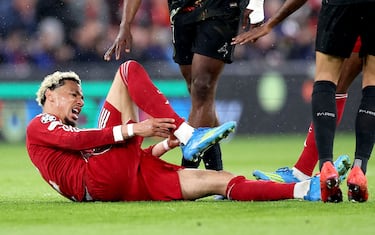
Remember those lightning counters of Mané, Salah and the supporting cast? Get ready for more with the caveat that teams will likely sit in and frustrate, something Iraola will have to find clear prompts to overcome.
Wide play and adventure building the future
While way too early to tell, one of the other main beneficiaries of the new gaffer could be Rio Ngumoha. Young wingers can sometimes find themselves trapped inside possession-heavy systems where every touch feels like a risk assessment. Iraola tends to favour a simpler form of processing: see a defender, attack the defender. The teenager’s direct running and willingness to take opponents on already feel naturally aligned with that philosophy. Competition in the wide areas is likely to arrive this summer, but Rio already has the fans hooked.
Then there’s Milos Kerkez, who certainly won’t need an introduction to AI. Having spent two seasons under Iraola at Bournemouth, the Hungarian already understands the pressing triggers, physical demands and relentless tempo that define the Basque coach’s football. As Liverpool adapt, that familiarity could prove to be invaluable.
The recruitment department also appears to have been working from a remarkably similar blueprint, long before the Slot decision was made. Giovanni Leoni and Jeremy Jacquet both look tailor-made for a manager who asks his defenders to survive in large spaces and solve problems in real time. Tall, athletic and comfortable defending far from their own goal, they fit the profile of centre-backs required when the defensive line lives permanently on the front foot. And Virgil van Dijk still has plenty to offer while they bed in.
The one area where Liverpool may still need further upgrades is full-back. Robertson’s departure leaves a significant void, while Conor Bradley’s immense promise continues to be interrupted by injuries. Frimpong’s arrival adds another attacking weapon, but Iraola’s football places enormous physical demands on wide defenders. If Liverpool have updated the software, there may still be a few components left to install.
The end of the Salah era
There is another reason this appointment feels symbolic. Mohamed Salah is leaving.
His final season was disappointing by the absurd standards he established for himself, but nothing that happened this year alters the reality of his legacy, even the possibly misjudged outbursts. He departs as one of the greatest players in Liverpool history, a footballer whose consistency was so remarkable that supporters occasionally forgot how impossible it was.

The goals, the trophies and the moments are secure. And I wouldn’t be surprised if we hear the familiar “running down the wing” in tribute for some time to come.
But his departure also removes the last remaining giant from Klopp’s great attacking machine.
Anfield’s AI, but not the Silicon Valley version
The irony is difficult to ignore.
Professional football increasingly talks about artificial intelligence, predictive models and algorithm-driven recruitment. Liverpool’s latest answer may simply be a different kind of AI.
Andoni Iraola’s football is not about removing uncertainty.
It is about recognising opportunity faster than everyone else.
His teams aim to attack before opponents can recover. Press before opponents can breathe. Move before opponents can think.
For much of the past season Liverpool looked like a team second-guessing itself. Think of ChatGPT or Claude delivering a hallucination over and over again and you getting more and more frustrated that the obvious solution appears so hard to grasp. Dangerous moments for opponents quickly became safe situations and it was all so predictable.
Iraola offers the opposite. Once the door opens, you walk through it.
That, ultimately, may explain why Liverpool have chosen him. Not just because he represents the future, but also because he reminds them of what returned them to greatness over the last decade.
Anfield has put its faith in AI.
Just not the artificial kind.
Related stories
Get closer to the game! Whether you like your soccer of the European variety or that on this side of the pond, our AS USA app has it all. Dive into live coverage, expert insights, breaking news, exclusive videos, and more. Plus, stay updated on NFL, NBA and all other big sports stories as well as the latest in current affairs and entertainment. Download now for all-access coverage, right at your fingertips – anytime, anywhere.
And there’s more: check out our TikTok and Instagram reels for bite-sized visual takes on all the biggest soccer news and insights.
Complete your personal details to comment