


Forget traditional A/C: New York building uses cutting-edge ‘ice battery’ system to cool air and save energy
Around 500,000 pounds of ice are created every night to maintain a comfortable temperature inside this iconic Manhattan building.
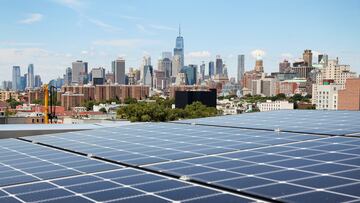
The Metropolitan Life North Building has been a feature of New York’s skyline for over three quarters of a century. Located in Manhattan, the 30-story Art Deco skyscraper has started to use an innovative, new cooling system that is cheaper and more environmentally-friendly than traditional air conditioning units.
Cooling Madison Eleven
Industrial freezers in the building’s basement are used to freeze water overnight when the cost of electricity costs is lower. The ice generated is then used to cool the building down during daytime, when the price of electricity surges, through an effective air-cooling system. The method works out at around 40% cheaper than standard air con.
Holly Paeper, president of Trane Technologies’ Global Life Science Solutions, gave an insight into how the system works to CBS: “There’s about 500,000 pounds of ice created every night. And to put that into context, think about three city buses full of ice cubes. So, when everyone else is using their electricity in the middle of July to cool their building or to cool their homes, it’s a big draw on the grid. This building won’t draw from that because it made its ice last night.
“We’ve done installations at about 4,000 sites globally,” Paeper adds. “There are six million commercial buildings in the US alone, and a very small fraction of them have installations like this.”
Air-cooled chiller troubleshooting
One of the drawbacks is that you need electricity to freeze water to make ice. One solution is to use water-based coolants - adding other biodegradable, non-toxic elements to the water to create a liquid that freezes quicker. However, these solutions tend to be more corrosive and prone to cause scaling.
And as Paeper points out, on particularly hot days when a large volume of people want to use electricity at the same time, there is a high chance of power grid stress.
The U.S. Department of Energy’s new minimum efficiency standards on commercial units above 65K BTU will go into effect in 2023. Get up to speed on these upcoming regulatory changes at https://t.co/nNadKecX41 and learn how Trane can support you along the way. pic.twitter.com/9CC1p7uFCq
— Trane Commercial HVAC (@TraneCommercial) July 20, 2022
Trane’s air-cooled chillers are definitely a step in the right direction - especially for states such as Washington who will be affected by the expansion of the 2022 Clean Buildings Performance Standard bill. Washington’s residential and commercial buildings will be required to reduce greenhouse gas emissions by 2027.
Related stories


Get your game on! Whether you’re into NFL touchdowns, NBA buzzer-beaters, world-class soccer goals, or MLB home runs, our app has it all.
Dive into live coverage, expert insights, breaking news, exclusive videos, and more – plus, stay updated on the latest in current affairs and entertainment. Download now for all-access coverage, right at your fingertips – anytime, anywhere.
Complete your personal details to comment