


CTE and mental health: What we know - and don’t - after Marshawn Kneeland case
The late NFL player’s diagnosis is prompting renewed focus on early-stage CTE, athlete mental health, and what science still can’t explain.
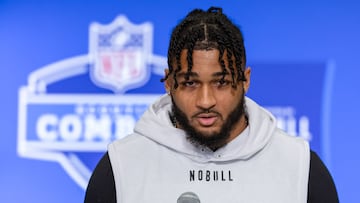

The posthumous diagnosis of Marshawn Kneeland has added to a growing and deeply complex conversation about brain health in contact sports.
Kneeland, a former defensive end for the Dallas Cowboys, was found to have Stage 1 chronic traumatic encephalopathy (CTE) after his brain was studied by researchers at Boston University’s CTE Center. He died by suicide in November 2025 at the age of 24. While the diagnosis offers some context, experts stress it does not provide simple answers.
🚨 Marshawn Kneeland, Cowboys DE who died by suicide, has been diagnosed with CTE. https://t.co/uO9a7ELmVG pic.twitter.com/IxTDa7Rjm2
— TMZ (@TMZ) July 7, 2026
What Stage 1 CTE actually means
CTE is a progressive brain disease linked to repeated head impacts, commonly associated with contact sports like football. There are four stages, with Stage 1 being the earliest and least severe. At this level, abnormal tau protein begins to accumulate in small areas of the brain. Symptoms, if present, may be subtle or inconsistent, and many individuals show no clear outward signs during life.
According to Ann McKee, who leads the Boston University CTE Center, early-stage cases like Kneeland’s are not uncommon in younger athletes. In fact, researchers have found signs of CTE in nearly half of studied athletes under 30, highlighting how early the disease process can begin.
The critical distinction: CTE and cause of death
One of the most important points emphasized by researchers is what this diagnosis does not mean. CTE cannot currently be diagnosed in living individuals - only after death - and its relationship with behavior, mood, and mental health remains an area of ongoing study.
Experts are clear that CTE is not considered a direct cause of suicide and mental health outcomes are multifactorial, involving biological, psychological, and environmental factors.
In Kneeland’s case, reports indicate that concerns about his mental health dated back several years, long before his death. The diagnosis may provide context, but it does not offer a definitive explanation.
Kneeland’s case reflects a bigger issue facing contact sports. There are long-term effects of repeated head impacts, even in relatively short careers. What makes this case particularly striking is his age. At just 24, Kneeland represents a growing number of athletes diagnosed with early-stage CTE far younger than previously understood. This is shifting how researchers think about exposure, not just at the professional level, but across high school and college football as well.
It also raises new questions, like how early CTE begins to develop, what level of exposure is considered “high risk”, and whether or not early-stage disease can be detected and treated during life.
The push for earlier detection and prevention
Researchers say progress is being made, but key challenges remain. Efforts are underway to develop methods to diagnose CTE in living patients, something that would be a major breakthrough for prevention and treatment.
In the meantime, attention is focused on reducing risk. That means limiting repetitive head impacts in training, improving helmet technology and safety protocols, increasing awareness around concussion management, and expanding mental health support for athletes.
Kneeland’s family, in choosing to donate his brain for research, has contributed to that effort, helping scientists better understand how the disease develops in its earliest stages.
As research continues, the conversation is shifting from reaction to prevention, from high-profile cases to systemic change. Kneeland’s story is part of that shift. Not as a definitive answer, but as a reminder of how much is still unknown, and how important it is to keep asking questions.
Related stories


Get closer to the game! Whether you like your soccer of the European variety or that on this side of the pond, our AS USA app has it all. Dive into live coverage, expert insights, breaking news, exclusive videos, and more. Plus, stay updated on NFL, NBA and all other big sports stories as well as the latest in current affairs and entertainment. Download now for all-access coverage, right at your fingertips – anytime, anywhere.
And there’s more: check out our TikTok and Instagram reels for bite-sized visual takes on all the biggest soccer news and insights.
Complete your personal details to comment