


World Cup 2026: The celebration of football, under the shadow of visas and immigration fears
The World Cup will not be spared from the strict immigration policies of Donald Trump.
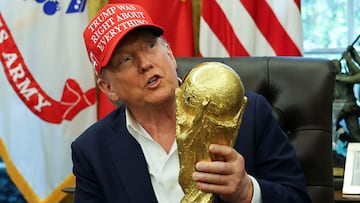
Since time immemorial, the World Cup has brought life to a standstill. The build-up to the tournament—the one event that gathers the world around a television set—is always charged with emotion. But the 2026 edition is a different beast.
With 48 teams and three host countries, it will be the largest World Cup in history, a summer defined by passion across Mexican, American, and Canadian soil. Yet in the United States, the official narrative wavers between hospitality and suspicion.
The spectacle of football has not abandoned its place in North America. Barely 24 hours after announcing that the World Cup group draw will take place at the Kennedy Center in Washington, Donald Trump resurfaced with a warning: Some countries will find it “very easy” to enter the United States, he said, while for others the process will be far more difficult.
¿Quién se alzará con el trofeo en 2026? 🗨️🗽#Somos26 | #CopaMundialFIFA pic.twitter.com/nT9ccP7hhC
— Copa Mundial FIFA 🏆 (@fifaworldcup_es) July 19, 2025
That message reflects a tense reality: daily raids against undocumented migrants, the revocation of temporary residence permits, and the mass verification of more than 55 million visas.
Since the 2025 Gold Cup and Club World Cup, thousands of immigrant families have abandoned plans to attend matches, convinced they would face detention and deportation in an atmosphere of relentless surveillance.
The president’s rebuff contradicts Secretary of Homeland Security Kristi Noem, who has insisted that while everyone will be thoroughly vetted, visitors will nonetheless be welcomed.
FIFA, for its part, downplayed the impact of U.S. immigration policies on its tournaments back in June, reiterating its central mission: to make the World Cup a space for unity.
🚨🇺🇸⚽️ | SE VIENE EL MAYOR MUNDIAL DE LA HISTORIA: Trump anunció que el Mundial de Fútbol 2026 en Estados Unidos "será el evento deportivo más grande de la historia" y "será como tener muchos Super Bowls en poco tiempo. Cada partido será más grande que un Super Bowl". pic.twitter.com/Z8mmpS3L6i
— La Derecha Diario (@laderechadiario) August 22, 2025
Related stories


But paradox defines the moment. The tournament meant to symbolize open borders and cultural exchange is taking place in a country where borders remain the most contested issue. To what extent can the passion for football break down the very walls that politics insists on building?
Get your game on! Whether you’re into NFL touchdowns, NBA buzzer-beaters, world-class soccer goals, or MLB home runs, our app has it all. Dive into live coverage, expert insights, breaking news, exclusive videos, and more – plus, stay updated on the latest in current affairs and entertainment. Download now for all-access coverage, right at your fingertips – anytime, anywhere.
Complete your personal details to comment