



FIFA steps in where NFL won’t: World Cup match to use curtains at Dallas stadium
FIFA will deploy curtains at Dallas Stadium for Japan vs. Sweden to prevent sunlight glare from impacting the World Cup group-stage clash.
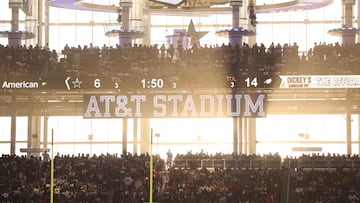

The 2026 World Cup is bringing a simple solution to a big problem in Dallas, where FIFA will take an extra step to ensure fair conditions for one of the tournament’s group-stage matches.
AT&T Stadium glare issue finally solved for Japan vs. Sweden
When Japan faces Sweden on Thursday, June 25 at AT&T Stadium, home of the NFL’s Dallas Cowboys, and known as “Dallas Stadium” for the World Cup, the venue’s massive glass-front design will once again come under scrutiny. The stadium’s western-facing windows have long created issues with late-afternoon sunlight pouring directly onto the field, many times affecting visibility for players during NFL games.
AT&T Stadium will put curtains on the windows during FIFA World Cup matches pic.twitter.com/hbDgzEdUiC
— Dallas Texas TV (@DallasTexasTV) May 22, 2026
For the World Cup, however, FIFA is not leaving anything to chance. According to tournament planning decisions, curtains will be deployed inside the stadium specifically for the Japan vs. Sweden fixture, kicking off at 6 p.m. local time, in order to block out direct sunlight and eliminate potential glare on the field. It is the only match at the venue scheduled to use the system in this way, with most other games set for later kick-off times when sunlight is less of a concern.
The decision makes it clear that FIFA is prioritizing removing environmental variables that could interfere with performance. Alongside issues like field surfaces and stadium configurations, sunlight exposure has been identified as one of the controllable factors at select venues.
AT&T Stadium, one of the most visually striking arenas in world football, is no stranger to the problem. The stadium’s design includes a large wall of windows along one side of the field, which can flood the field with bright, low-angle light depending on the time of day. While the effect is often part of the stadium’s identity, it has also been a recurring point of discussion and frustration amongst the players.
FIFA has announced that they WILL indeed be using the curtains at AT&T (Dallas) Stadium for the 2026 World Cup… and it didn’t seem like it was much of a question for them to do so Sooooo… why does Jerry Jones still refuse to do it for Cowboys games? #TikTokCampaign #Soccer pic.twitter.com/7dkLt7XS9g
— Ev Hand (@Evan_Hand) June 2, 2026
If the architecture creates a disadvantage, FIFA will adjust the environment accordingly. In this case, that means temporarily transforming one of the most open, light-filled stadiums in the competition into a controlled, shaded playing surface.
Japan vs. Sweden may not be the highest-profile fixture of the tournament, but it is one that demonstrates how seriously organizers are taking game conditions at World Cup venues across the United States. And in Dallas, that means ensuring that when the teams step onto the pitch, the only thing deciding the outcome is soccer, not the sun.
Related stories


Get closer to the game! Whether you like your soccer of the European variety or that on this side of the pond, our AS USA app has it all. Dive into live coverage, expert insights, breaking news, exclusive videos, and more. Plus, stay updated on NFL, NBA and all other big sports stories as well as the latest in current affairs and entertainment. Download now for all-access coverage, right at your fingertips – anytime, anywhere.
And there’s more: check out our TikTok and Instagram reels for bite-sized visual takes on all the biggest soccer news and insights.
Complete your personal details to comment