


Katharine Hepburn, after winning another Oscar and not accepting it: “For me, awards mean nothing. My award is my work”
The movie legend made it clear on numerous occasions that she rejected the awards she received during her lifetime.
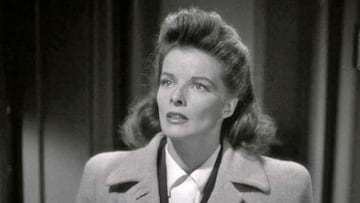
“Wronged Lady” (1940), “The African Queen” (1951), “The Lion in Winter” (1968), “On Golden Pond” (1981) ... There are so many iconic Katharine Hepburn films that you could spend hours naming them. The overwhelming acclaim she received from audiences stood in stark contrast to the weight she gave awards.
“For me, prizes are nothing. My prize is my work,” Hepburn said after failing to attend the ceremony to collect any of the four Oscars she won. From the outset, she made clear just how much importance she attached to those statuettes: none.
Katharine Hepburn, a life devoted to the big screen
Katharine Hepburn (1907–2003) was not only one of the great stars of classical Hollywood – above all, she was an actress who broke the mold in her own era. With her aristocratic bearing, razor-sharp diction, and a personality that had little interest in conforming to the conventions of the American studio system, she built an artistic image unlike that of other leading women of her time. Hepburn was resolute in breaking with the traditional image of women in Hollywood films. Her career also left a very specific mark on Oscar history: she remains the performer with the most Academy Awards won in a lead acting category, with four wins from a total of 12 nominations.
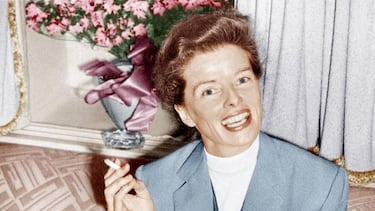
Her rise was remarkably swift. After making her name in the theater, she debuted in film in the early 1930s and quickly became a major figure. Her first great boost from the Academy came with “Morning Glory” (1933), the film that earned her the Oscar for best actress at the 6th Academy Awards. That victory immediately placed her among Hollywood’s elite and confirmed that she was not merely a charismatic new face, but an actress of immense authority. In those early years, she also delivered key films that shaped both her public image and her artistic identity, including “Little Women” (1933) and “Bringing Up Baby” (1938).
Hepburn’s career, however, was never a straight line. There were periods of commercial decline and moments when parts of the industry regarded her as difficult or unprofitable. But her career showed an extraordinary capacity for renewal.Films such as “The Philadelphia Story” (1940) strengthened her standing and helped cement one of the most sophisticated screen presences in American cinema. Later, her professional and romantic partnership with Spencer Tracy produced a run of essential films, among them “Woman of the Year” (1942), which brought her another Oscar nomination. Hepburn not only survived changing public tastes – she managed to remain a central figure for decades, something extraordinary in an industry that often gave actresses a far shorter shelf life.
Her relationship with the Oscars eventually became an almost legendary measure of that longevity. Thirty-five years after her first win, she triumphed again for “Guess Who’s Coming to Dinner” (1967) at the 40th Academy Awards. The following year, she won once more for “The Lion in Winter” (1968), in a famous tie with Barbra Streisand, becoming the first person to win three acting Oscars. Much later, in the twilight of her career, she claimed a fourth award for “On Golden Pond” (1981) at the 54th Academy Awards. That sequence captures the exceptional scale of her journey: Hepburn won Oscars across four different decades, turning the Academy into a privileged witness to her artistic endurance.
Seen in retrospect, Katharine Hepburn’s greatness does not rest on numbers alone, impressive as they are. Her 12 nominations and four statuettes tell the story of an actress able to reinvent herself without losing her identity, to move beyond classicism, screwball comedy, and drama without ever becoming unrecognizable. In her case, the Oscars were not decorative trivia, but the visible trace of an interpretive authority sustained over half a century. Few careers illustrate the idea of lasting prestige in Hollywood so well, and no actress has turned that prestige into a record to match hers.
Related stories
Get closer to the game! Whether you like your soccer of the European variety or that on this side of the pond, our AS USA app has it all. Dive into live coverage, expert insights, breaking news, exclusive videos, and more. Plus, stay updated on NFL, NBA and all other big sports stories as well as the latest in current affairs and entertainment. Download now for all-access coverage, right at your fingertips – anytime, anywhere.
And there’s more: check out our TikTok and Instagram reels for bite-sized visual takes on all the biggest soccer news and insights.
Complete your personal details to comment