


Cave sealed for 40,000 years where the last Neanderthals may have lived—discovered in Gibraltar
Researchers say the discovery of animal remains and other evidence is helping them reconstruct how these ancient humans lived.
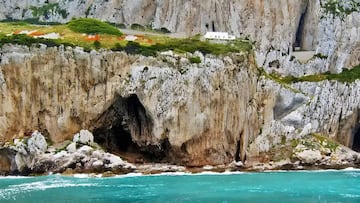
A newly opened chamber has just been revealed after remaining sealed for roughly 40,000 years. It is located at the rear of Vanguard Cave, within the Gorham’s Cave Complex, a UNESCO World Heritage Site.
Early findings suggest it may be a rare time capsule, one that could have sheltered some of the last Neanderthals in Europe, long after they had disappeared from most of the continent.
Archaeologists from the Gibraltar National Museum have spent years excavating the back of the cave in search of hidden passageways and ancient sediment layers. They have now uncovered a chamber measuring about 43 feet in length, positioned high in the cave’s ceiling and cut off from the outside world.
Inside, researchers found animal remains including bones from a lynx, hyena, and griffon vulture, along with claw marks left by a large carnivore and the shell of a sea turtle.
“Given that the sand sealing the chamber was [40,000] years old, and that the chamber was therefore older, it must have been Neanderthals,” explained Clive Finlayson, director of the museum, Live Science.
The discovery is part of the Gorham’s Cave Complex, which includes four adjoining caves that preserve evidence of both Neanderthal and modern human life spanning more than 100,000 years.
Description of the complex
Gorham’s Cave, Vanguard Cave, Hyaena Cave, and Bennett’s Cave now open almost directly onto the sea, although during the Ice Age their entrances faced dry land.
UNESCO describes the site as a key location for understanding Neanderthal behavior because it shows they hunted birds and marine animals, used feathers as ornaments, and created abstract engravings.
Radiocarbon dating indicates the site was inhabited from approximately 33,000 to 24,000 years ago, making it one of the last known Neanderthal refuges in Europe.
Related stories
Get closer to the game! Whether you like your soccer of the European variety or that on this side of the pond, our AS USA app has it all. Dive into live coverage, expert insights, breaking news, exclusive videos, and more. Plus, stay updated on NFL, NBA and all other big sports stories as well as the latest in current affairs and entertainment. Download now for all-access coverage, right at your fingertips – anytime, anywhere.
And there’s more: check out our TikTok and Instagram reels for bite-sized visual takes on all the biggest soccer news and insights.
Complete your personal details to comment