


Scientists solve the great mystery of the Grand Canyon
A geological study has reconstructed the course of the river millions of years ago.
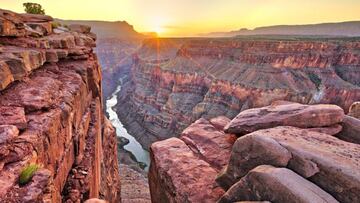
New research on the Colorado River has provided fresh insight into when it began flowing through the region. By analyzing tiny grains of the mineral zircon found in sandstone formed from river-transported sediments, along with particles of ash from volcanic eruptions, researchers were able to trace the routes the river followed in the distant past. The study was published in the journal Science.
The analysis suggests that about 6.6 million years ago, the river began flowing into a large depression in the Earth’s surface in northwestern Arizona. There, it formed a broad, shallow lake east of where the Grand Canyon would later take shape.
Over time, around 5.6 million years ago, the water that had accumulated in this lake began to overflow, moving through what is now the Grand Canyon region. It then continued across other basins until reaching the Gulf of California about 4.8 million years ago, where it emptied into the ocean in northwestern Mexico.
Adding to the debate
“Scientists have long debated when the Grand Canyon was carved, and our study contributes to that conversation,” said John He, a lead co-author of the study.
“Imagine you go out to a river bank and scoop up a handful of sand. In that handful, there are hundreds of thousands of sand grains that look like any other sand grain. But within that handful there will be a couple of hundred or even thousands of microscopic grains of zircon crystal, each of which is a vault of information about where it comes from," he explained.
The Colorado River begins at La Poudre Pass in Rocky Mountain National Park, in the state of Colorado, and runs for about 1,450 miles (approximately 2,330 kilometers).
“A longstanding question has been: where did the Colorado River go before it flowed through Grand Canyon?” said Ryan Crow, another co-author of the study.
“We have long known that the river existed in western Colorado 11 million years ago, and that it did not (flow through) Grand Canyon until after 5.6 million years ago. But until now we knew almost nothing about where it was during the intervening time,” he concluded.
Related stories
Get closer to the game! Whether you like your soccer of the European variety or that on this side of the pond, our AS USA app has it all. Dive into live coverage, expert insights, breaking news, exclusive videos, and more. Plus, stay updated on NFL, NBA and all other big sports stories as well as the latest in current affairs and entertainment. Download now for all-access coverage, right at your fingertips – anytime, anywhere.
And there’s more: check out our TikTok and Instagram reels for bite-sized visual takes on all the biggest soccer news and insights.
Complete your personal details to comment