


Claudio Feijóo, China expert: “Taking Taiwan would have an enormous cost”
The engineer and director for Asia at the Polytechnic University of Madrid talks about Beijing's role in the new era of geopolitics.
The return of Donald Trump to the White House has disrupted the geopolitical landscape. Suddenly, Western countries and their citizens are looking more favorably at other nations, powers less aligned with Washington, the long-standing point of reference that once provided certainty.
But disorder has been the norm for months now. When a former ally starts to feel like a threat, countries look elsewhere to build new relationships. Is China becoming the new popular player on the global stage? Is Beijing turning into a reference point for Western countries distancing themselves from the United States?
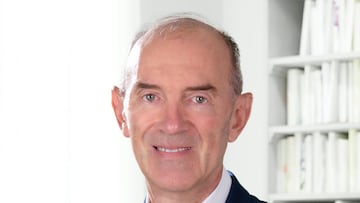
Claudio Feijóo is an engineer, economist, professor, and since 2014, Asia director at the Technical University of Madrid. He has lived in China for several years, traveling extensively across the country, and has written multiple books about it. He spoke with Diario AS about Beijing’s role in today’s shifting international order, the Taiwan issue, and relations between China and Spain.
How would you describe relations between Spain and China?
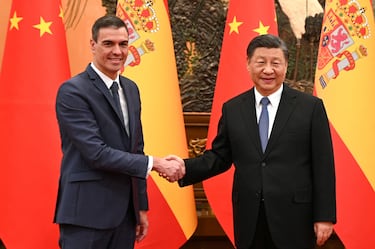
They are quite good, within the broader framework of Europe’s relationship with China, which is complex. Within Europe, Spain is one of the countries with the healthiest ties to China. The relationship is imbalanced in China’s favor, but there is an effort to move toward greater equality. We are seeing Chinese companies with advanced technology coming to Spain, transferring knowledge and creating opportunities. There is a clear intention to generate added value with China’s help. Overall, this is a positive period in our relationship with China, despite its complexity.
Why does Spain have a better relationship with China than other European countries?
It comes down to several factors. First, consistency. China has a planned economy and long political cycles because there are no elections. It prefers working with countries that offer policy continuity, without sudden shifts, and Spain has maintained consistent policies toward China over the past 10 to 15 years. That fits well with how China operates, favoring reliable and stable partners.
This is a positive period in our relationship with China, despite its complexity
Claudio Feijóo
Second, there is a certain natural connection. Spanish society has some collectivist traits, and so does China. We are less individualistic, which helps foster personal relationships. I do not have scientific evidence to prove this, but it is my personal view. We are not like other European countries or the United States, where societies tend to be more individualistic.
Third, China sees opportunity in Spain. It values our cultural understanding and views us as part of Europe with strong ties to Latin America and close proximity to North Africa. That makes Spain an attractive place for investment. Finally, there are broader factors such as talent, relatively affordable energy, and economic dynamism.
What could cause those relations to deteriorate?
If expected outcomes are not achieved. Both China and Spain have responsibilities. On China’s side, it needs to address imbalances in trade and regulation. Europe makes it relatively easy for Chinese companies to operate here, but China does not offer the same openness. That needs to be corrected, or it will become a problem.
Spain has its own responsibilities. If we attract Chinese investment, we must be able to absorb that technology and turn it into value within Spain. In other words, we need to support and integrate foreign technology. For example, Spain produces many components for car manufacturing, and now it must adapt to the rise of Chinese electric vehicles.
In this turbulent geopolitical moment, is China’s image improving?
It is not so much that China’s image is improving, but that the United States’ image is declining. By comparison, China appears more stable. However, China has no interest in a highly chaotic world. It may benefit from a certain level of instability, but only to a point. China has long-term trade agreements with countries in Latin America and Africa, and global instability could jeopardize those deals. At the same time, China is seen as a more reliable partner than Washington, but it is not interested in taking responsibility for solving other countries’ problems.
China has no interest in a highly chaotic world
Claudio Feijóo
Does China want to become the main global power, a true alternative to the United States?
In an ideal scenario, if China succeeds in its plans, it would become the most important country without imposing dominance in the way the United States has. China aims to create economic dependencies, where others work with and profit alongside China, but China benefits more. It does not seek to impose a political system or dictate how others govern or trade. Its influence operates through economics and dependency. The message is: do what you want domestically, as long as you remain economically and technologically dependent on China.
China aims to create economic dependencies, where others work with and profit alongside China, but China benefits more.
Claudio Feijóo
Does China prioritize stability and trade while reducing interventionism?
Yes. There is a quote I like from Lee Kuan Yew, the long-time leader of Singapore, who understood China very well. He said China offers opportunities for economic development and allows others to prosper, until one day it disapproves of something and responds by saying that millions of Chinese citizens are unhappy with your decision or statement. We recently saw something similar with Japan, after comments about possibly intervening if Beijing invaded Taiwan. China responded by boycotting Japanese products. This is how it exerts pressure through economic dependency.
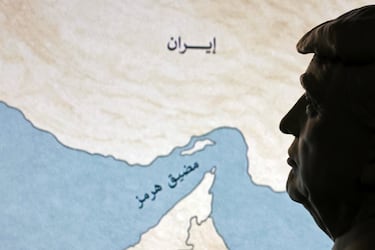
China also has dependencies, such as energy imports through the Strait of Hormuz.
China’s main dependencies are food and energy. It does not produce enough of either to meet domestic demand, and it is working rapidly to reduce those vulnerabilities. If a conflict involving Iran were prolonged, China has already prepared by building reserves and strengthening ties with Russia. When it anticipated instability, it even restricted crude exports.
How does China plan to reduce its dependence on food imports?
It is investing heavily in developing more resilient and productive rice and wheat. It is also working to mechanize agriculture, although it still has progress to make. Its declining population will also help reduce pressure on food demand and move the country closer to self-sufficiency.
Is Taiwan primarily a strategic issue for China, or a historical one tied to reunification?
It is mainly historical, but also strategic. Geography matters. The United States has open access to both the Atlantic and Pacific Oceans. China, by contrast, is geographically constrained. To the north lies Siberia, to the west mountains and deserts, to the south jungles and more mountains, and its access to the Pacific is hemmed in by Korea, Japan, Taiwan, and the Philippines.
In practical terms, China is trapped; it can’t get out of there without anyone noticing its movements. Taiwan functions like a natural aircraft carrier off China’s coast. If it were part of the People’s Republic, China would gain unrestricted access to the Pacific.
China is trapped; it can’t get out of there without anyone noticing its movements. Taiwan is a kind of natural aircraft carrier.
Claudio Feijóo
At the same time, Xi Jinping has made Taiwan central to his vision of a “great China.” He has framed reunification as a key objective and I think Xi Jinping wants to go down in history as the president who achieves it. If China sees an opportunity, especially if the United States is distracted or overstretched, it may feel tempted to act. Xi is also getting older, and historical ambitions can intensify over time. That said, it is a complex issue that would come at enormous cost for China. The preferred plan is still for Taiwan to return peacefully, as a so-called renegade province.
I think Xi Jinping wants to go down in history as the president who achieves it (the annexation of Taiwan)
Claudio Feijóo
It seems China is not in a rush, that this vision of a “great China” may take time?
China promoted the idea of “one country, two systems” in Hong Kong, partly with Taiwan in mind. However, developments in Hong Kong have made many Taiwanese skeptical of that model. If peaceful reunification happens at all, it will likely be far in the future. It is possible that Taiwan’s nationalist party could gain influence and improve relations with mainland China, but I remain somewhat skeptical.
Do U.S. interventions elsewhere give China more freedom to act in Taiwan?
Chinese analysts are certainly studying this closely. There are two possible interpretations. One is that the United States is overstretched and lacks the capacity to handle another conflict. The other is that the United States is deliberately weakening China’s alliances and support networks, gradually isolating it. In other words, creating a chaotic world where China cannot fully capitalize. We do not know exactly what motivates Trump’s actions, but that is one possible explanation.
Have you seen an increase in tourism to China?
Yes. China is very interested in strengthening its soft power and is making significant efforts to attract tourists and showcase how safe and prosperous life there can be. Tourism is growing, although fewer foreigners are choosing to live in China long-term.
Why is that?
The system has become more closed and demanding, with fewer freedoms than many foreigners are used to. But as a tourist destination, it is excellent and heavily promoted.
Related stories
Get closer to the game! Whether you like your soccer of the European variety or that on this side of the pond, our AS USA app has it all. Dive into live coverage, expert insights, breaking news, exclusive videos, and more. Plus, stay updated on NFL, NBA and all other big sports stories as well as the latest in current affairs and entertainment. Download now for all-access coverage, right at your fingertips – anytime, anywhere.
And there’s more: check out our TikTok and Instagram reels for bite-sized visual takes on all the biggest soccer news and insights.
Complete your personal details to comment