


Does saying “please” and “thank you” to AI actually do any good? Science answers
A study suggests that moderate politeness when interacting with AI can lead to clearer or more optimized responses. But moderation is key.

Several months ago, Sam Altman, the CEO of OpenAI, the company behind ChatGPT, revealed that including polite messages or sign-offs such as “thank you,” “please,” or “goodbye” in conversations with AI adds up to costs in the tens of millions of dollars.
From a technical standpoint, these are messages that artificial intelligence does not actually appreciate, and they consume additional computing power and energy unnecessarily.
Even so, new research suggests that being courteous to AI may not be as “pointless” as it first seems. In some cases, a more polite tone can produce responses that are more accurate or better organized.
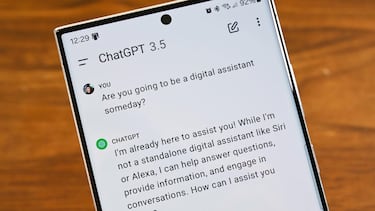
Moderate politeness can improve the responses we get from AI. here’s why
A 2024 study published by researchers at Waseda University in Tokyo, Japan, examined how different levels of politeness affect prompts, or instructions, given to various language models such as OpenAI’s ChatGPT and Meta’s LLaMA.
The researchers tested a range of tones, from blunt, rude, and even disrespectful language to extremely formal phrasing, across three different languages: English, Chinese, and Japanese.
Their findings showed that ruder prompts tended to produce worse responses, while a moderately polite tone generally led to more reliable results than either extreme. In other words, the sweet spot lies somewhere in the middle.
It is not that AI “rebels” when you insult it. The explanation is much simpler, and it has to do with how language models actually work.
Systems like ChatGPT do not “understand” politeness in a human or relational sense, but they do respond differently to certain linguistic patterns found in their training data.
As a result, a prompt that is clearer and framed in a more collaborative way can guide the AI toward responses that are better structured or more complete. The reverse is also true: instructions that are overly terse or ambiguous can lead to simpler or less developed answers.
This idea is also supported by a scientific paper from Google DeepMind researcher Murray Shanahan, who compared the way these systems operate to “a very smart intern.” In his view, language models tend to adapt to the conversational role the user sets, both directly and indirectly.
Put another way, if you speak to them as if they are a collaborator, they often respond in a more cooperative, patient, and detailed manner. By contrast, if you issue abrupt or overly authoritarian commands, they may default to giving only minimal, bare-bones answers.
Ultimately, the debate over whether these small gestures of politeness are truly useful is still ongoing. Sam Altman himself has pointed out that messages like “please” and “thank you” create additional computational costs when multiplied across millions of daily queries.
Even so, several surveys show that many users continue to include them anyway, not because they believe AI will appreciate the gesture, or to avoid some future Terminator-style retaliation, but simply because politeness is already part of how they communicate in everyday life.
Related stories
Get closer to the game! Whether you like your soccer of the European variety or that on this side of the pond, our AS USA app has it all. Dive into live coverage, expert insights, breaking news, exclusive videos, and more. Plus, stay updated on NFL, NBA and all other big sports stories as well as the latest in current affairs and entertainment. Download now for all-access coverage, right at your fingertips – anytime, anywhere.
And there’s more: check out our TikTok and Instagram reels for bite-sized visual takes on all the biggest soccer news and insights.
Complete your personal details to comment