


Going to the moon won’t make you a millionaire: astronauts’ real salaries shatter the myth
Astronauts traveling to space on the Artemis II mission, a 10-day lunar flyby, earn salaries set by the U.S. government.
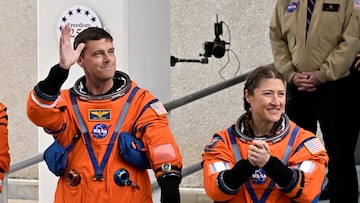
More than five decades after Apollo 11 landed on the Moon, the space race has proven capable of evolving alongside geopolitics and technology. Little remains of the grainy black-and-white footage broadcast in 1969. Today, with a single click, we can watch live images of the astronauts leading the Artemis II program.
The mission, which involves an approximately 10-day trip around the Moon, offers a day-by-day look inside the Orion capsule as Reid Wiseman, Victor Glover, Christina Koch, and Jeremy Hansen undergo critical tests under real mission conditions. Engineers and mission teams will evaluate life-support systems and assess how the spacecraft performs in deep space, from autonomous navigation to its ability to withstand radiation.
Although the purpose of this mission may seem less dramatic than the first Moon landing on July 20, 1969, advances in space technology have not been matched by equally dramatic increases in astronaut pay. The astronauts aboard Artemis II do not have multimillion-dollar contracts, nor do they receive hazard bonuses. They are government employees.
Hello, Moon. It’s great to be back.
— NASA (@NASA) April 7, 2026
Here’s a taste of what the Artemis II astronauts photographed during their flight around the Moon. Check out more photos from the mission: https://t.co/rzM1P0QbOl pic.twitter.com/6jWINHkDLh
NASA astronauts are classified within the U.S. federal pay system at the GS-13 to GS-14 levels, which translates to annual salaries of roughly $98,000 to $163,000.
Contrary to what many might assume given the extraordinary qualifications required for the job, the crew does not receive financial incentives tied to the danger of the mission. There are no special bonuses for traveling to space and no overtime pay.
A salary with one exception
The inclusion of Jeremy Hansen, an astronaut from the Canadian Space Agency, highlights the multinational nature of the Artemis program, which brings together several partners with shared scientific and strategic interests.
In Hansen’s case, compensation is different. Because he is paid under Canada’s public-sector system, his salary can range from approximately $71,000 to $139,000 USD per year depending on rank and experience, which in some cases may be somewhat higher than that of his American counterparts.
Hi! I’m Rise!
— NASA Artemis (@NASAArtemis) April 8, 2026
About a week ago, I launched aboard the Artemis II mission with four of my besties. Since then, I have been serving a very important purpose aboard the Orion spacecraft… I float. (And I look cute.)
Today, I am taking over the Artemis social media accounts! -Rise pic.twitter.com/hdTMeq82PC
From an economic standpoint, these figures may seem modest given the extreme demands placed on these professionals. Becoming an astronaut requires exceptional qualifications and involves risks that most other public employees will never face.
Even so, the value of their work is not measured by the spectacle of spaceflight. Instead, it is determined by NASA’s internal rules and federal compensation standards, which are designed to maintain pay consistency across government roles.
Despite the profession’s salary limitations, interest in becoming an astronaut remains enormous. Every recruitment cycle attracts thousands of applicants for only a handful of positions.
The motivation is rarely financial. The real reward is something else entirely: the opportunity to contribute to scientific progress and human knowledge, achievements that ultimately belong to all of humanity.
Related stories
Get closer to the game! Whether you like your soccer of the European variety or that on this side of the pond, our AS USA app has it all. Dive into live coverage, expert insights, breaking news, exclusive videos, and more. Plus, stay updated on NFL, NBA and all other big sports stories as well as the latest in current affairs and entertainment. Download now for all-access coverage, right at your fingertips – anytime, anywhere.
And there’s more: check out our TikTok and Instagram reels for bite-sized visual takes on all the biggest soccer news and insights.
Complete your personal details to comment