


Dr. Marc Weissbluth, expert on sleeping techniques shares strategies for babies: “Sleep is serious business”
Getting your baby to sleep can be seem like an impossible challenge, however, the experts have come to the rescue with some helpful tips.
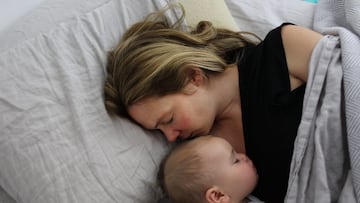

If you are a parent, or expecting to be, you will know that everyone you talk to will have some advice to give you, whether sought or not. One of the areas that can be the most challenging for new parents deals with sleep, both for the baby and themselves. Getting enough sleep is just as important as making sure that your baby is eating enough.
The amount of sleep plays a role in a baby’s memory, language, executive function, and cognitive development as well as physical growth according to studies. As Dr. Marc Weissbluth, expert on sleeping techniques says in a blog post: “Sleep is serious business.”
How much should infants sleep?
The amount of sleep that an infant needs varies from kid to kid and changes as they get older. Here are some general ranges according to Stanford Medicine.
- Newborns to first few months: 16 to 17 hours
- 4 to 12 months: 12 to 16 hours
- 1 to 2 years: 11 to 14 hours
Keep in mind that newborn babies generally sleep for an hour or two at a time and may not have a pattern right away, waking up to eat and then La La Land once again. They do not distinguish between night and day, so it’s advised that parents get sleep when the baby sleeps.
After a couple weeks they will begin to stay awake longer as well as sleep for longer periods of time. After a few months, they’ve generally developed a schedule, three naps on a regular pattern and sleeping for longer periods during the night says the Mayo Clinic.
Strategies for helping babies sleep
Weissbluth shared a selection of pre-sleep routines that parents can employ to facilitate their child falling asleep with greater ease. These involve both soothing and specific activities that they can choose from depending on their situation and the child’s age and response to them.
The idea though is simple, that the newborn will begin to associate them with being drowsy and relaxed. The doctor advises to be consistent with the bedtime sequence at all sleep times once you’ve found one that works.
You’ll be grateful in the end. “A consistent bedtime routine has been found to be a predictor of better sleep, including, specifically, fewer night wakings.” But he notes the sequence does not have to be the same for each parent. “Your baby will learn to associate each style with each parent,” he explains.
Soothing actions that you can have as part of your routine include rhythmic rocking, sucking, gentle pressure and sounds. These induce “a calm and peaceful state compatible with transitioning to a sleep state.”
Besides soothing, other pre-bedtime activities can include a bath, brushing teeth, getting dressed for bed, having a meal, reading books, saying prayers.
Also, it’s key to remember to reduce stimulation prior to bedtime as well as making sure the room is quiet, lullabies or natural sounds aside, dark, and not warm. Good luck with the sweet dreams!
Related stories
Get closer to the game! Whether you like your soccer of the European variety or that on this side of the pond, our AS USA app has it all. Dive into live coverage, expert insights, breaking news, exclusive videos, and more. Plus, stay updated on NFL, NBA and all other big sports stories as well as the latest in current affairs and entertainment. Download now for all-access coverage, right at your fingertips – anytime, anywhere.
And there’s more: check out our TikTok and Instagram reels for bite-sized visual takes on all the biggest soccer news and insights.
Complete your personal details to comment