


Juanjo Regalado, emergency pilot: “We saved a life in two minutes”
MARSEC-26 brings the Navy and emergency services together at the Port of Alicante to strengthen prevention and coordination in maritime security.
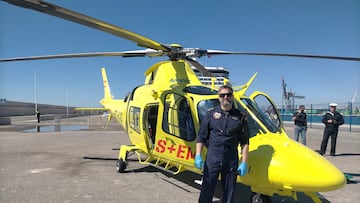
Pier 14, Port of Alicante. A call comes into 112: a Navy frigate, the P62 Cartagena (a fictional name for the exercise), reports an onboard emergency. MARSEC 26, the Navy’s annual maritime security drill, has just been activated. It spans more than 15 locations across the country and tests the response capacity and coordination of all city emergency services.
Fire, toxic cloud, and multiple casualties: the scenario
This year’s scenario is clear and complex: “Fire with a toxic cloud.” From there, a chain of incidents unfolds rapidly. The ship’s captain suffers a stroke. A fire breaks out onboard. The vessel is carrying aniline, a highly toxic substance. A spill occurs in the harbor. Three sailors fall into the water, and seven others are injured, some seriously. Chaos. Evacuations. Simultaneous operations by sea, land, and air. And ultimately, an effective and coordinated response.
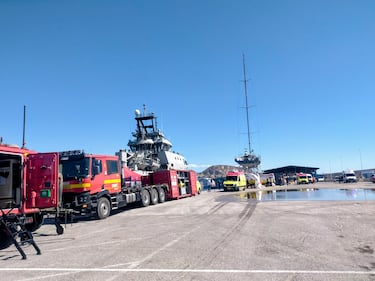
From early morning, Alicante became one of the country’s main stages for maritime security and emergency response. The day offered a firsthand look at how real coordination between civilian and military services works when time is critical.
Alicante in the international spotlight for a day
The MARSEC 26 exercise also marks the beginning of Spain’s presidency of the Mediterranean Coast Guard Functions Forum (MCGFF 2026), giving the event an international dimension. Observers from Peru, Cameroon, Japan, and Mauritania attended, along with representatives from member countries such as Italy, Tunisia, France, Algeria, Egypt, and Morocco. For a few hours, Alicante became a real-world laboratory for international cooperation in maritime security.
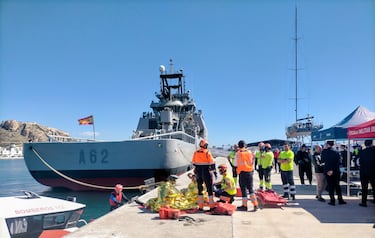
The exercise is part of the annual maritime safety drills and coincides with Spain’s leadership of the MCGFF 2026, positioning the city as an international strategic reference point for a day.
The opening was presided over by Admiral of Maritime Action Vicente Querol Gamboa, accompanied by the Naval Commander of Alicante, Rafael Torrecillas del Prado, who was directly responsible for Scenario III. The message was clear: maritime security is not improvised. It is trained, coordinated, and built in advance.
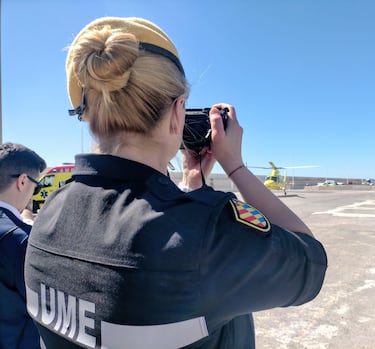
The exercise showcased joint operations by the Navy through the Maritime Action Force, the Alicante Naval Command, the Port Authority, Maritime Rescue, the Civil Guard (Maritime Service), Port Police, healthcare services, firefighters, Civil Protection, and the Military Emergency Unit (UME). This diversity of actors is no coincidence. Risk in the maritime domain is cross-cutting and can only be managed effectively when every link in the system operates in sync.
Prevention: the true invisible protagonist
Beyond the deployment of vessels, vehicles, including a helicopter, technical equipment, and specialized personnel, the central value of the exercise was prevention. MARSEC-26 is not just about demonstrating strength. Its goal is to detect failures before they become real emergencies, improve protocols, and strengthen mutual trust between agencies. In an international context shaped by hybrid threats, port incidents, environmental risks, and increasingly complex maritime traffic, anticipation becomes the primary factor in security.
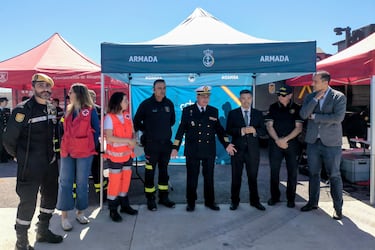
One of the most notable aspects of the day was seeing how coordination between institutions is no longer viewed as a one-time response to a crisis, but as an ongoing work culture. Response times, clarity in the chain of command, and communication between civilian and military bodies were closely evaluated, demonstrating that integrating capabilities is now a strategic necessity, not an option.
“In two minutes we save a life”
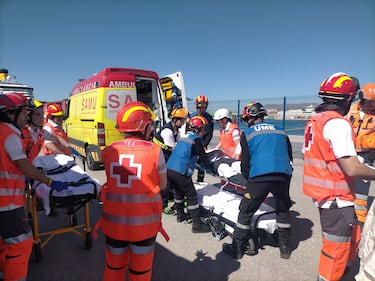
One of the key moments of the exercise was the evacuation of a severely burned victim by helicopter. Leading the operation was emergency pilot Juanjo Regalado.
“If the injured person had to be transferred to the hospital in Alicante, we could save a life in two minutes,” he explains. “In this case, the simulation involves a severe burn victim, so the transfer is to Valencia, with an estimated flight time of about 28 minutes.”
As he shows the fully equipped medical interior of the helicopter, Regalado highlights the versatility of this type of aircraft, capable of responding quickly to all kinds of emergencies, from maritime accidents to critical medical situations.
Visiting the P62 Cartagena with its captain
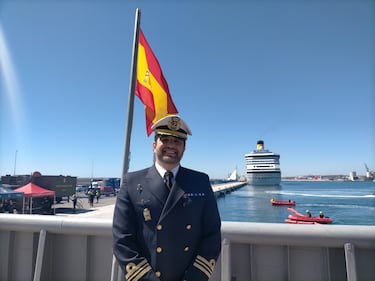
Carlos Perdido Aramburu, Corvette Captain and commanding officer of the vessel, explains the simulated emergency:
“We are currently in the Alicante MARSEC scenario, one of several taking place across Spain. In this case, we are in Phase 3, triggered by an onboard incident that we are simulating.”
“The situation begins with a container carrying aniline, a toxic substance, which has generated a cloud. At this moment, personnel from the Military Emergency Unit are analyzing how that cloud is spreading to activate, if necessary, public warning protocols. In addition, to prevent potential spills in the harbor basin, an anti-pollution barrier has been deployed,” he adds.
“We have had eight injured personnel. Early this morning, the simulated ship’s commanding officer suffered a stroke upon arrival and had to be evacuated immediately by firefighters and medical services. Later, during the scenario, we had several injuries from trauma and burns. One of the severe burn cases was evacuated by helicopter. Additionally, three crew members panicked and jumped into the water. They were rescued by a fire department boat and evacuated with symptoms of hypothermia.”
Regarding how realistic these situations are, he explains:
“On a ship, you always have to be prepared for anything. Incidents are relatively common, especially those involving fires or flooding. It is not unrealistic for any vessel, whether military or civilian, to experience a fire onboard, flooding, or a spill. Sometimes it only takes a malfunctioning valve. And in the case of a serious accident, such as running aground or a major fire, the situation can escalate quickly.”
As for telemedicine capabilities at sea:
“Onboard, we have a medical unit and telemedicine systems, so the ship’s medical staff can be guided at all times by specialists from Gómez Ulla Hospital. This is essential when operating far from the coast.”
Alicante: a strategic port and a security testing ground
Alicante was not chosen by chance. Its port, one of the most active in the western Mediterranean, combines commercial, tourist, recreational, and institutional activity, making it an ideal environment for testing responses to complex incidents. It was the only port in the Valencian Community selected.
Exercises like MARSEC-26 also aim to strengthen Alicante’s image as a strategic hub for international cooperation at a time when maritime security is a shared priority across the Mediterranean basin.
Related stories
Get closer to the game! Whether you like your soccer of the European variety or that of this side of the pond, our AS USA app has it all. Dive into live coverage, expert insights, breaking news, exclusive videos, and more. Plus, stay updated on NFL, NBA and all other big sports stories as well as the latest in current affairs and entertainment. Download now for all-access coverage, right at your fingertips – anytime, anywhere.
And there’s more: check out our TikTok and Instagram reels for bite-sized visual takes on all the biggest soccer news and insights.
Complete your personal details to comment