


Mohamed Yunus, Nobel Peace Prize laureate: “We need to create a new civilization guided by human values”
The Bangladeshi economist revolutionized the fight against poverty with microcredit and advocates for an economic model centered on people.
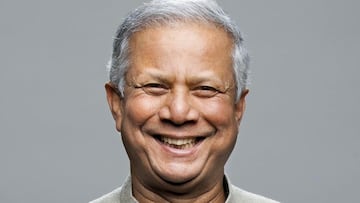
Few figures have changed the way we understand economics as profoundly as Muhammad Yunus. With a seemingly simple idea, lending small amounts of money to people who lack access to traditional banking, he transformed millions of lives and laid the foundation for a new way to combat poverty.
Awarded the Nobel Peace Prize in 2006, Yunus has spent decades arguing that today’s economic system needs deep and fundamental change.
The origins of microcredit
Born in 1940 in Bangladesh, Yunus studied economics in the United States. It was only after returning to his home country, however, that he encountered the problem that would define his career: extreme poverty in the aftermath of independence.
In the 1970s, he began lending small sums of his own money to women in rural villages who could not access bank loans. The results were striking. Not only did they repay the loans, but they also improved their living conditions.
From this experience, Grameen Bank was born, a pioneering microfinance institution that now serves as a model around the world.
An economy that serves people
Yunus’s approach goes beyond credit. His concept of “social business” promotes companies whose primary goal is not to maximize profits, but to solve social problems such as poverty, education, and access to healthcare.
In his view, the current system has prioritized financial gain over human well-being. For that reason, he insists on rethinking market rules and building a more inclusive economy.
Human beings are not born just to work and make money he has said in many forums. They also have the ability to change the world in his opinion
The impact of his work has been enormous, especially in developing countries. Millions of people, most of them women, have gained access to financing through the microcredit model.
However, his ideas have also faced criticism. Some experts question the interest rates charged in certain microfinance programs or their long-term effectiveness. Even so, Yunus remains one of the most influential voices in discussions about development and inequality.
More than half a century after his first loans, Yunus continues to argue that change is possible. His message remains highly relevant in a global context shaped by economic and social crises.
For him, the future depends on redesigning the system from the ground up: “If we keep doing the same things, we will get the same results. We need a new civilization based on human values.”
Related stories
Get closer to the game! Whether you like your soccer of the European variety or that on this side of the pond, our AS USA app has it all. Dive into live coverage, expert insights, breaking news, exclusive videos, and more. Plus, stay updated on NFL, NBA and all other big sports stories as well as the latest in current affairs and entertainment. Download now for all-access coverage, right at your fingertips – anytime, anywhere.
And there’s more: check out our TikTok and Instagram reels for bite-sized visual takes on all the biggest soccer news and insights.
Complete your personal details to comment