


Scientists agree: “The crisis in the river fish ecosystem is much more severe than people imagine”
The crisis facing freshwater migratory fish is alarming experts, who say they are working against the clock to protect these species.
Just as the water flowing through a river is never the same, neither are the fish that inhabit it. Hidden beneath the surface, billions of fish travel long distances every day as part of their migratory cycle. Among the most remarkable is the dorado catfish, known for journeys of up to about 6,835 miles from spawning grounds in the foothills of the Andes to feeding areas in the Amazon estuary, and then back again.
Intrigued by this extraordinary freshwater phenomenon, Dr. Zeb Hogan of the University of Nevada saw an opportunity to lead research into freshwater fish populations around the world. According to an analysis prepared by the United Nations Convention on the Conservation of Migratory Species (CMS), populations of these fish have declined by approximately 81% worldwide since 1970.
This decline is no accident. These species are especially vulnerable to the persistent damage caused by human activity, particularly river and lake pollution, overfishing, and the climate crisis. “Animal migration is one of nature’s great wonders,” said Amy Fraenkel, Executive Secretary of the CMS, who has expressed admiration for the synchronization and endurance freshwater fish display during their migrations.
“These species face mounting pressures at every stage of their life cycles,” Fraenkel said. “International cooperation is essential to ensure that such species survive and thrive.”
According to The Guardian, the 132 countries that are part of the CMS are meeting this week in Brazil, near the Amazon, one of the last great refuges for migratory freshwater fish. During the meeting, delegates are expected to consider measures such as removing or preventing barriers in rivers, maintaining adequate river flow, reducing pollution, and regulating fish catches.
Migratory freshwater fish are in steep decline due to pressures along their paths, including dams, altered flows, habitat degradation, pollution and unsustainable fishing.
— UN Environment Programme (@UNEP) March 25, 2026
Restoring rivers and habitats cannot wait.
Read the #CMSFreshwaterFishes report: https://t.co/WsvywHpFK1 pic.twitter.com/l1kg1ERFEs
Rivers as connected systems
Freshwater fish are among the most threatened wild animals on the planet, and international coordination is critical to their protection and survival. These species support the livelihoods and food security of hundreds of millions of people worldwide and are the foundation of some of the largest inland fisheries on Earth.
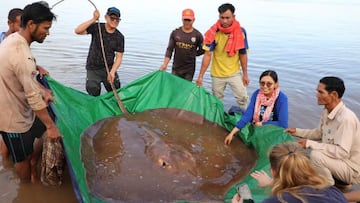
One example is Tonlé Sap Lake in Cambodia, part of the Mekong River system, which supports more than 100 migratory species. “They can catch several tons of fish in an hour,” Hogan said.
Related stories
Along their journeys, these fish move through river basins shared by multiple countries. “Rivers don’t recognise borders – and neither do the fish that depend on them,” said Michele Thieme, Vice President and Deputy Director of Freshwater at WWF-U.S.
According to Thieme, it is only a matter of time before these migrations disappear unless action is taken. She warns of the urgent need to understand and manage rivers need “as connected systems, with coordination across borders and investments in basin-wide solutions now before these migrations are lost forever.”
Complete your personal details to comment