


UEFA’s showpiece club competition captures the imagination of the world, but there so much more than the Champions League for European teams.

Champions, Europa and Europa Conference Leagues compared: formats, changes, prize money...
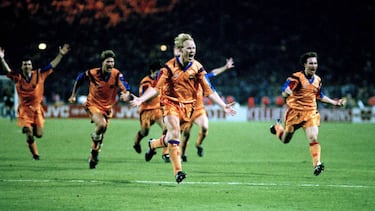
As we reflect on the changes to club football on the Old Continent, we realise that things have become a little more complicated. The European Cup, for example, initially a straightforward knockout tournament exclusive to league champions, maintained this structure even with the inception of the Champions League in the 1992-93 season. For the initial five seasons, only domestic champions were eligible to participate.
Explaining the UEFA competitions
The UEFA Cup, on the other hand, served as a coveted reward for clubs that had performed admirably in the league but fell short of clinching the top spot. Interestingly, many observers contended that the UEFA Cup might have been, at times, the most formidable European cup competition, attributing this to the heightened participation of teams from major leagues.
Completing this trio was the now-defunct Cup Winners’ Cup, exclusively catering to domestic cup winners from the preceding season, adhering precisely to its descriptive name.
Now, however, things are rather less simple, which anyone who has ever watched a Champions/Europa/Europa Conference League draw will attest to. But it seems to be more than pleasing UEFA’s bean counters.
How does the Champions League work?
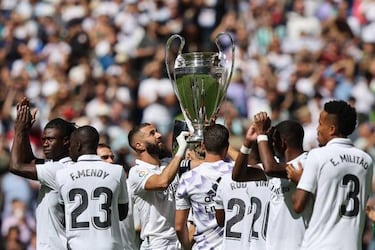
The Champions League is, of course, no longer just for champions and hasn’t been for over 25 years. The current system means that qualification is heavily weighted in favour of clubs from the ‘big’ leagues/countries at the top of the UEFA coefficient, which ranks leagues in Europe from 1st to 55th.
The top four clubs (or occasionally more) from the top four leagues qualify directly for the group stages, which is where the money is. The champions from just the top 10 leagues are guaranteed group stage football, although the qualifying stages are divided into the ‘champions’ path and the ‘league’ path (for clubs who finished second or third in their respective leagues).
The runners-up from the top six leagues go straight into the group stage, while those from the 7th to 15th ranked leagues have a chance to qualify, as do the third-placed teams from the 7th, 8th and 9th best leagues.
After that, things get easier. Well, only if you’ve been watching developments in recent years.
League phase replaces group stage
The old format placed 32 teams into eight groups of four during the group stage. That structure is gone. In its place is a single 36-team league, where every club is part of the same table in what is now called the league phase.
Number of fixtures
Under the previous system, each team played six games within its group, facing the same three opponents home and away. The new setup increases that to eight matches per team. Each club now plays four games at home and four away, but against eight different opponents. Before the draw, teams are divided into four pots based on UEFA coefficients, with each side facing two opponents from each pot, one home and one away.
Dates
The group stage used to wrap up before Christmas. That is no longer the case. With two additional matchdays added, the league phase now extends into January, with rounds seven and eight scheduled after the holiday period.
Knockout rounds: who qualifies?
The round of 16 remains the official start of the knockout stage, but there is now an added playoff round beforehand. The top eight teams in the league table advance directly to the round of 16. Teams finishing between 9th and 24th enter a two-legged playoff, with those ranked 9th to 16th seeded and those from 17th to 24th unseeded.
The eight playoff winners move on to complete the round of 16 lineup. Teams finishing in the bottom eight are eliminated, with no drop-down into the Europa League under this format.
From the round of 16 onward, the competition follows its traditional structure: two-legged ties through the knockout rounds, culminating in a single final at a neutral venue, such as Budapest’s Puskas Arena for the 2025/26 season.
How does the Europa League work?
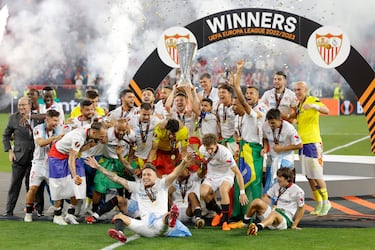
The UEFA Cup was rebranded as the Europa League for 2009-10 and now follows a relatively similar format to the new Champions League.
Entry into the competition is determined by UEFA’s coefficient rankings, with places usually given to high-finishing league teams that miss out on the Champions League, along with the main cup winner.
If a club qualifies through multiple routes, the Champions League always takes priority. Any freed Europa League place is passed down within the domestic league or left unused if limits are reached. In rare cases, top-ranked nations can gain an extra spot depending on results in European competitions.
League phase replaces group stage
The tournament itself is split into two main stages. First comes a league phase, where each team plays eight matches against different opponents, home and away. The top eight teams move straight into the round of 16, while those finishing between 9th and 24th enter a playoff round to secure the remaining places. Teams below that are eliminated.
From the round of 16 onward, it follows a classic knockout format with two-legged ties, leading to a one-off final at a neutral venue. The winner earns a place in the next season’s Champions League. Matches are typically played on Thursdays.
How does the Europa Conference League work?
The Conference League follows a similar access system based on UEFA coefficients, but is designed for lower-ranked teams across Europe. Entry is split into two paths: one for league-based qualifiers and another for clubs dropping down after being eliminated from Champions League qualifying. Most countries send between one and three teams depending on ranking, while Liechtenstein again enters only its domestic cup winner.
Unlike the Europa League, this competition largely acts as a continuation of the old lower-tier structure, giving more clubs from smaller leagues a European route without increasing the total number of continental spots.
The tournament format mirrors the modern system already in place. It begins with a league phase where each team plays eight matches against different opponents. The top eight advance directly to the round of 16, while those finishing 9th to 24th enter a playoff round for the remaining places. Teams below that cutoff are eliminated.
From the round of 16 onward, it becomes a standard knockout competition with two-legged ties leading to a single final at a neutral venue. The winner earns a place in the following season’s Europa League, and games are typically played on Thursdays.

What is the prize money for Champions League, Europa League and Europa Conference League?
Champions League
Clubs entering the league phase receive a base payment of about $20 million, plus $2.3 million per win and $760,000 per draw.
Additional bonuses depend on final standings, ranging from roughly $300,000 up to $10.7 million, with extra payments of about $2.2 million for finishing in the top eight and $1.1 million for places 9 to 16.
From the knockout rounds, earnings rise quickly: about $11.9 million for the round of 16, $13.5 million for the quarterfinals, $16.2 million for the semifinals, $20 million for the runner-up and $27 million for the winner.
Europa League
Clubs in the league phase receive a base payment of about $4.7 million, with performance bonuses of roughly $490,000 per win and $165,000 per draw.
League standings add smaller extras: about $650,000 for finishing in the top eight and $325,000 for places 9 to 16. Teams entering the playoff round earn around $325,000.
From the knockout stages, payouts rise: about $1.9 million for the round of 16, $2.7 million for the quarterfinals and $4.9 million for the semifinals. Finalists receive roughly $7.6 million, with the winner earning an additional $6.5 million on top.
Europa Conference League
From the league phase, each club receives a base payment of about $3.4 million for participation. Performance bonuses are added on top: roughly $430,000 per win and $145,000 per draw.
Final standings also bring extra rewards. Teams finishing in the top eight earn about $430,000 more and go straight to the round of 16, while those placed 9th to 24th receive around $215,000 and enter the playoff round.
Prize money increases through the knockout stages. Clubs collect roughly $860,000 for reaching the round of 16, about $1.4 million for the quarterfinals and around $2.7 million for the semifinals. The runner-up earns close to $4.3 million, while the winner takes home about $7.5 million.
And now you know...
Related stories
Get closer to the game! Whether you like your soccer of the European variety or that on this side of the pond, our AS USA app has it all. Dive into live coverage, expert insights, breaking news, exclusive videos, and more. Plus, stay updated on NFL, NBA and all other big sports stories as well as the latest in current affairs and entertainment. Download now for all-access coverage, right at your fingertips – anytime, anywhere.
And there’s more: check out our TikTok and Instagram reels for bite-sized visual takes on all the biggest soccer news and insights.
Complete your personal details to comment