



A punishing season leaves stars struggling for fitness, with injuries threatening to reshape the 2026 World Cup landscape.

World Cup alert: star count dropping as injury list continues to grow
The buildup to the 2026 World Cup has been shaken by a growing wave of injuries, raising serious concerns across the global game. Lamine Yamal, Estevão and Serge Gnabry are among the latest casualties of a season defined by relentless physical demands. The first two are now doubts to reach peak condition in time for the tournament in the United States, Canada and Mexico, while the German forward has already been ruled out of representing his country in June and July. The mounting injury toll is casting a long shadow over what should be a celebration of the sport at its highest level.
The physical strain on players is becoming increasingly evident. Many are, in blunt terms, breaking down under the weight of accumulated minutes. Clubs have navigated a grueling 2025–26 campaign, and the toll has been apparent since early in the season. Now, with the World Cup approaching fast, the situation has triggered alarm among teams and national federations alike, all wary of losing key figures at the worst possible moment.
Serious injuries becoming a defining issue
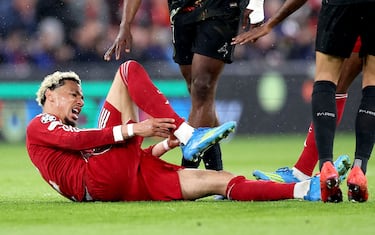
The tournament will already be missing several high-profile names. Physical problems have steadily built up over the months, with the intensity of club competition spilling over into international concerns. Cases such as Hugo Ekitiké with France highlight the difficulty of arriving in optimal condition after such a packed schedule. His Achilles tendon rupture against Paris Saint-Germain is far from an isolated incident.
Juan Foyth for Argentina, Luís Malagón for Mexico, Carter-Vickers for the United States and Sweden’s Lundgren have suffered similar setbacks and will also miss the World Cup. These types of injuries remain among the most feared in modern soccer, often requiring immediate surgery and lengthy recovery periods. The frequency of these cases points to a broader structural problem within the current calendar.
The ravages of the cruciate ligament
It is not just workload that is causing concern. The pace and density of fixtures are also taking a toll, compounded by heavily used playing surfaces. Limited recovery time, combined with intense training demands, has made it increasingly difficult for players to maintain peak physical condition. Even factors such as boot selection have come under scrutiny in a sport that seeks to control every marginal gain.
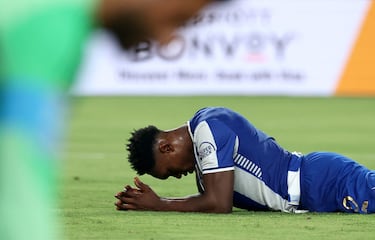
Knee injuries, particularly ACL tears, have surged in recent months. Rodrygo suffered one with Real Madrid, while Joaquín Panichelli picked up a similar injury in training with Argentina. Others affected include Samu Aghehowa with Porto, Takumi Minamino at Monaco and Mohammed Salisu, also at the French club. These injuries typically require prompt surgical intervention and long rehabilitation periods, further complicating World Cup preparations. The rise in knee injuries underscores how fragile player fitness has become under modern demands.
Bodies reaching breaking point
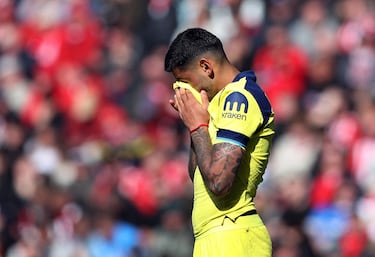
Muscle injuries are also on the rise, often leading to tears that sideline players at crucial moments. Gnabry’s case is emblematic – after his injury against Real Madrid, his World Cup hopes ended. Meanwhile, Lamine Yamal and Estevão have both shown signs of fatigue, leaving doubts about their readiness for the tournament. Late setbacks for Éder Militão and Arda Güler have only added to the uncertainty surrounding final squad selections.
Goalkeepers have not been spared. Alisson and Marc-André ter Stegen are both racing against time to recover, highlighting that this issue extends beyond outfield players. In many cases, lingering problems, rushed recoveries or pressure to return early have worsened conditions, often resulting in hamstring tears. The pattern suggests a system pushing athletes beyond sustainable limits.
Club pressures further complicate matters. Cristian Romero’s situation at Tottenham, where relegation remains a threat, illustrates the conflict between club needs and international ambitions. He, like many others, faces a tight timeline to be fit for the World Cup.
Mikel Merino, dealing with a stress fracture, Joško Gvardiol with a broken leg, Wataru Endo with ankle ligament damage, Romelu Lukaku with a hamstring injury and Matthijs de Ligt with a back problem all remain uncertain. What once promised to be one of the most compelling World Cups in history is now clouded by doubt, as the physical limits of the modern game are tested like never before.
Related stories
Get closer to the game! Whether you like your soccer of the European variety or that of this side of the pond, our AS USA app has it all. Dive into live coverage, expert insights, breaking news, exclusive videos, and more. Plus, stay updated on NFL, NBA and all other big sports stories as well as the latest in current affairs and entertainment. Download now for all-access coverage, right at your fingertips – anytime, anywhere.
And there’s more: check out our TikTok and Instagram reels for bite-sized visual takes on all the biggest soccer news and insights.
Complete your personal details to comment